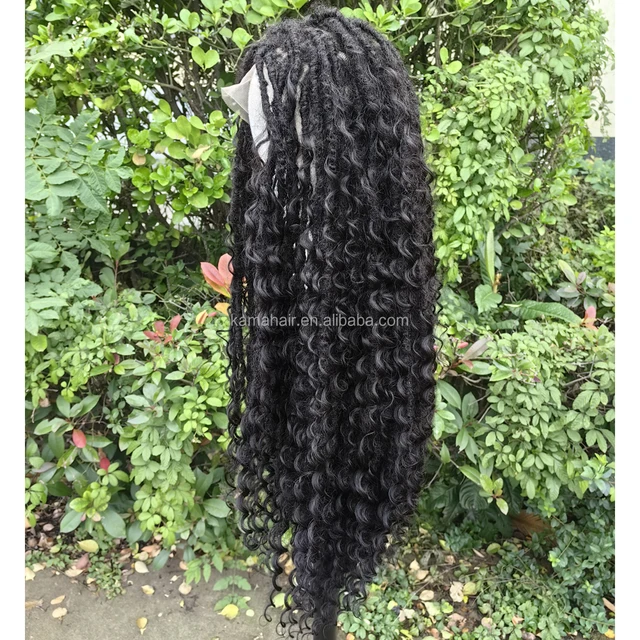
Knot bleaching is the single step that decides whether a HD lace unit disappears on the scalp or reads as a dark dotted grid. It is also the step that most often shortens a unit's service life when it is applied as a default rather than a decision.
1. What Bleaching Actually Does to the Knot
Each ventilated knot is human hair folded and knotted onto the lace mesh. Bleaching lifts the melanin inside the knot so the fold reads lighter against skin. The same chemistry that lifts the knot also weakens the lace fibre and thins the hair at the anchor point, which is why a heavily bleached unit sheds first at the hairline and not at the crown.
2. When Bleaching Is the Right Call
Bleaching pays off when the client wears the hairline exposed: a middle part, a slicked-back style, or any look where the forehead line is visible. Dark hair on a light scalp on a HD or transparent lace base shows the greatest visual gain.
It is the wrong call when the unit will be worn under a lace closure or a frontal with a fringe, when the client's shade is already light, or when the unit is expected to survive repeated colour services — the knots will not carry a second lift.
3. The Tint of the Lace Changes the Answer
A transparent or HD lace base takes a lighter knot without a visible mesh shadow, so a moderate bleach is usually enough. On a medium-brown or dark-brown lace, the mesh itself provides visual camouflage, and over-bleaching only buys fragility. Always assess knot colour against the lace tint, not against the client's skin in isolation.